

We use all sorts of food-adjacent monikers for people: a smart cookie, a top banana, a big cheese, a bad apple, a couch potato.1 Well, according to Plato, we are also featherless chickens… although technically he called us “featherless bipeds.”🐣
Cue Diogenes of Sinope, the Most Cynical Man Alive™, who was known for living in a large wine barrel in the Athenian Agora with basically no possessions; walking the streets in broad daylight with a lantern looking for “an honest man”; masturbating in public as a demonstration of the Cynics’ rejection of artificial social norms; soliciting alms from a statue to practice being refused; and hazing prospective students by making them publicly carry around a stinky fish (or maybe stinky cheese).
He also once told off Alexander the Great for standing in his sunlight and, according to one account, attempted to prove the uselessness of cooking by eating a raw octopus…which spectacularly backfired as he might have died of colic thereafter.2 🐙🙊

Plato was a particular target of his mockery. On one occasion, Diogenes trampled across Plato’s fine carpets with the proclamation, “I trample upon the pride of Plato.” And, as mentioned, when Plato defined humans as “featherless bipeds,” Diogenes plucked a chicken, brought it into Plato’s lecture room, and announced: “Here is Plato’s man,”—an incident well represented in art, from paintings by Hendrick Bloemaert and Friedrich Georg Weitsch, to, my personal favorite, this little WIP sketch by Delacroix. But perhaps the most famous image is Ugo da Carpi’s monumental print of Diogenes at his barrel, accompanied by the famous plucked chicken.🪶🤌🏼🍗
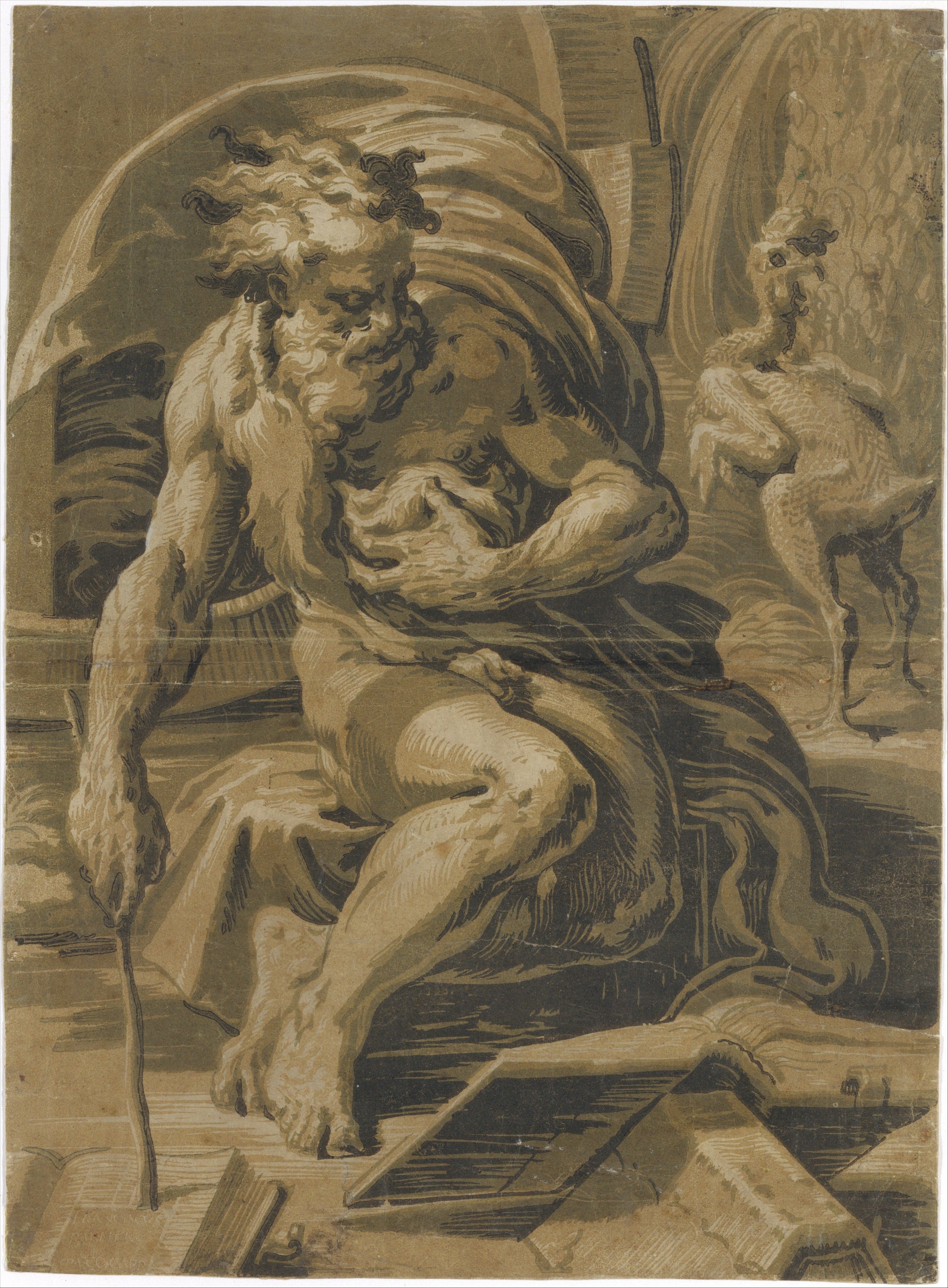
This landmark of Renaissance color printing was made using a technique called chiaroscuro woodcut, in which multiple woodblocks—in this case four—were printed in different tones to produce shadows, volume, and effects that could resemble drawings or watercolor.3 Parmigianino is thought to have worked closely with Ugo on the design, and Vasari later singled it out as Ugo’s “most beautiful print.”4 👍
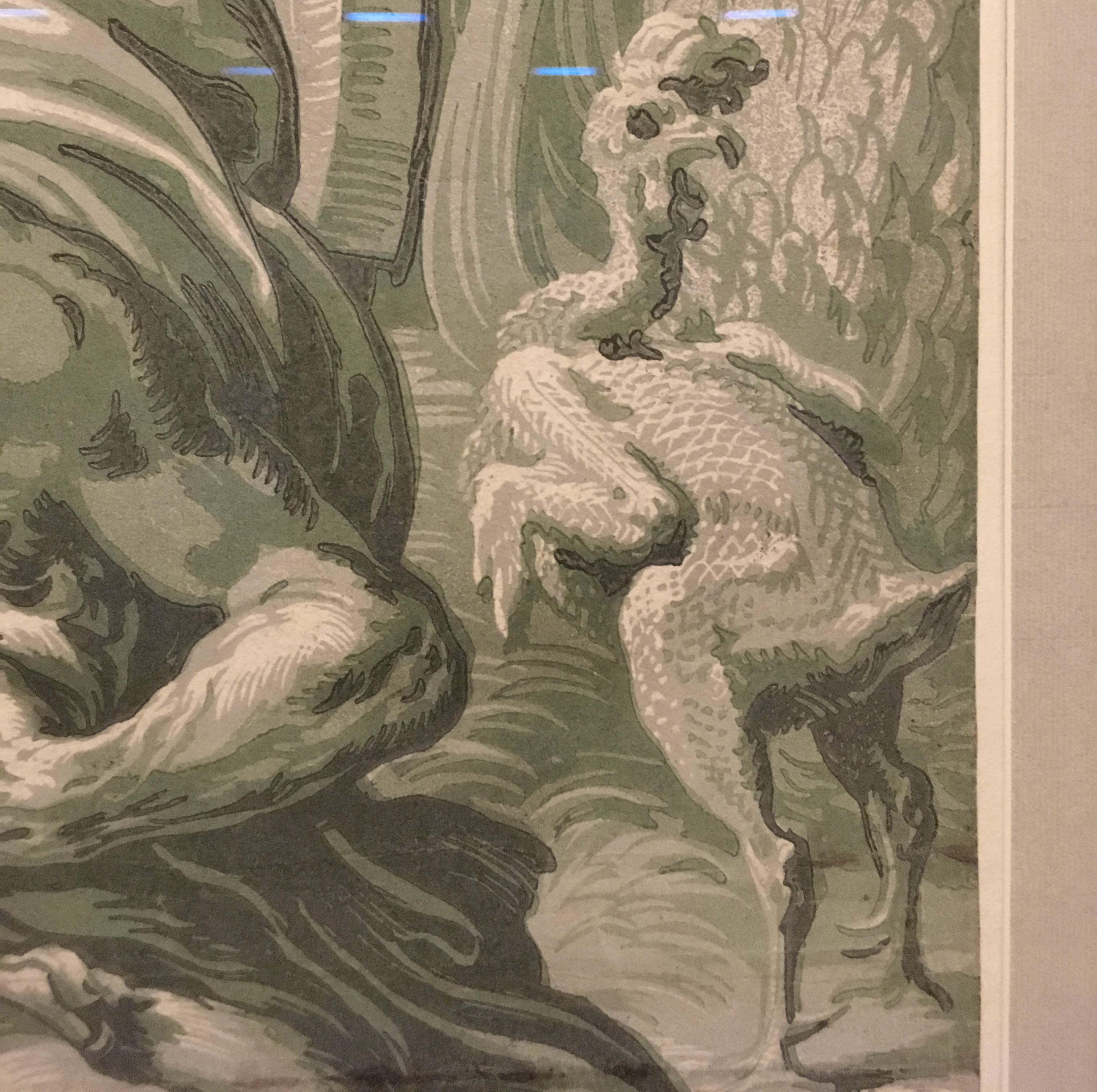
The image would prove influential in Renaissance representations of the philosopher. For instance, this sixteenth-century Urbino maiolica stand borrows directly from Ugo’s print combining the isolated depiction of the philosopher with the moment of Alexander the Great’s visit. Such objects served to demonstrate the owner’s own fluency in classical teachings.5 So think about that the next time you encounter a plucked chicken: maybe you’re not just looking at dinner but also contemplating your humanist bonafides.🧠🧐
Diogenes was also once out-asceticized by a child. He saw a boy drinking water from his cupped hands and promptly threw away his own drinking cup, then saw another using a piece of bread to scoop up lentils and threw away his bowl too.6🚮
Which naturally reminded me of what I thought was a classical Greek dish served in a bowl: avgolemono soup. One of my favorite places to order this standard is at Pi Bakery in SoHo, a perfect respite during a Tribeca gallery crawl (and you’ll need it this month as you tackle 550+ gallery openings in NYC).
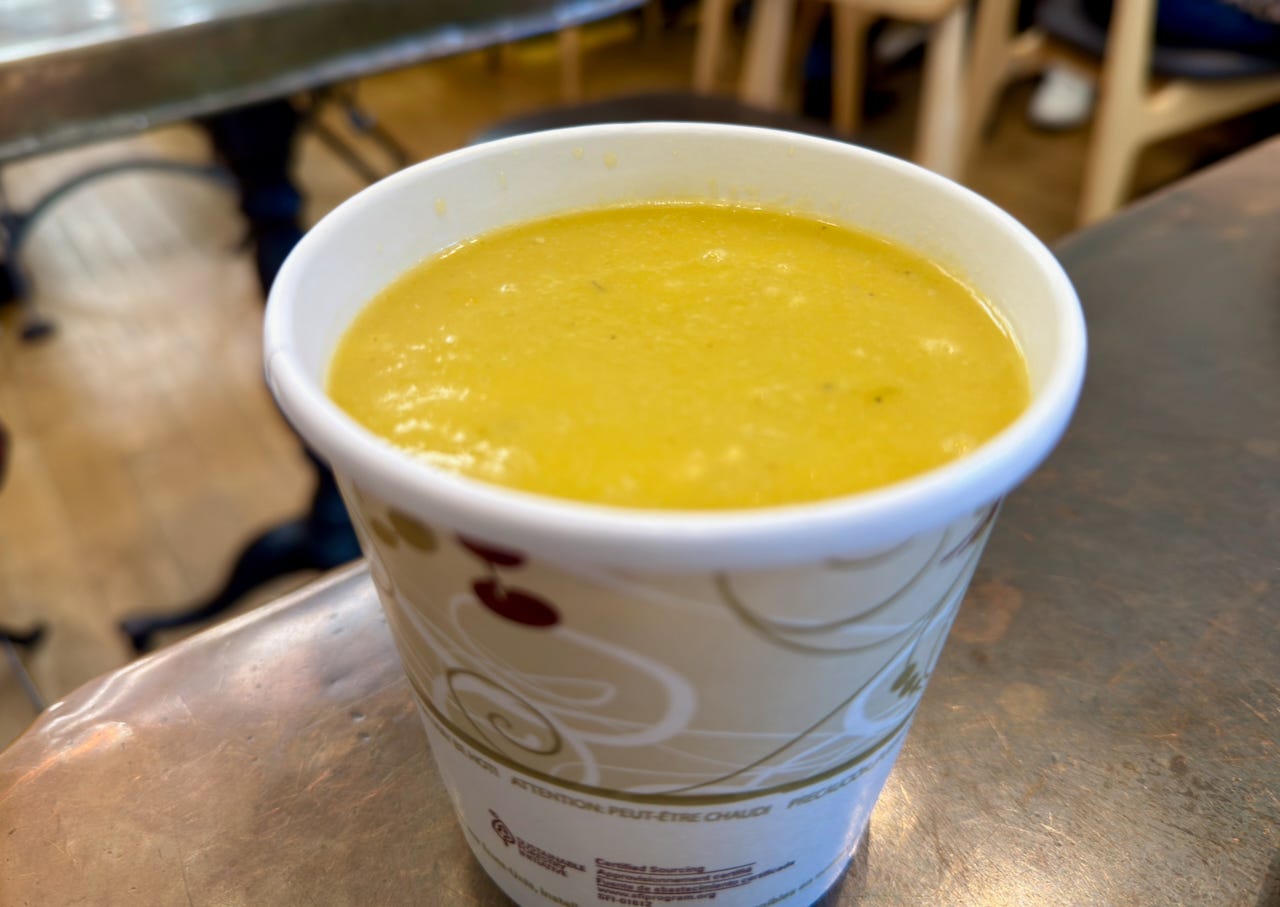
Avgolemono combines the words avgo (egg) and lemoni (lemon), and it’s not just a soup but a thickening technique. 🍋🥚 Food historians have often connected the technique to agristada, an egg-and-acid sauce central to Sephardic cooking in Spain. Early preparations used sour agents such as agraz (verjuice) and bitter orange instead of lemon.7
How did this technique migrate from Spain to present day Greece? Well, the Spanish Inquisition’s ugly legacy rears its head here, as it evolved from witch hunting to prosecuting Conversos and Moriscos suspected of secretly practicing Judaism and Islam respectively. In 1492, Ferdinand II of Aragon and Isabella I of Castile issued the Alhambra Decree, ordering practicing Jews to convert to Christianity or leave the Iberian Peninsula, leading large numbers of expelled Sephardic Jews to settle throughout the Ottoman world, including present-day Istanbul and Thessaloniki.8
Over the following centuries, related egg-and-lemon preparations appear across Sephardic, Greek, Turkish, and Arab cooking. The mixture crosses religious holidays: in Cyprus, egg-and-lemon soup is traditionally eaten on the eve of Easter Sunday, while Sephardic Jews from Turkey and the Balkans break the Yom Kippur fast with sopa de huevos y limón, a close cousin of avgolemono.
And because this is New York, there are now versions that include champagne, including Pylos’s Avgolemono me Sampania. Unlike Diogenes, however, I recommend keeping your bowl and utensils. Just try not to dwell too much on the central tenets of Cynicism, lest it forces you to bail on those other 549 or so gallery openings.
Rating: 🐓🍋🥚🥣/5
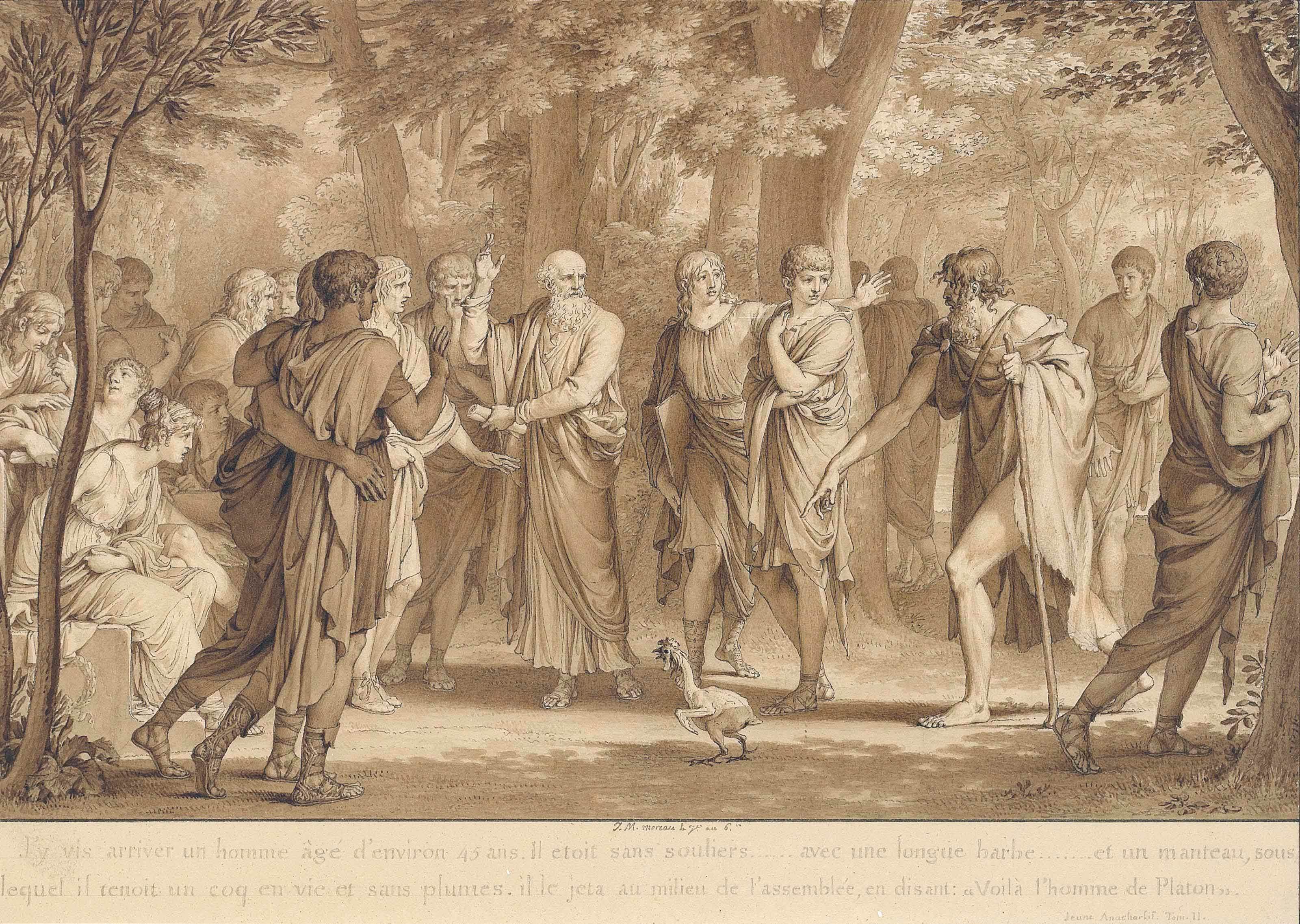
This is nothing compared to French, where lexicographers have counted more than 1,500 expressions gourmandes, or food-related expressions, five times more than American English. See Stéphane Gillet, Dictionnaire des expressions gourmandes: 1500 images, dictons et proverbes (Vendémiaire, 2022).
Many of these anecdotes survive in Diogenes Laërtius (no relation), Lives of Eminent Philosophers. Ambrogio Traversari translated the work into Latin in the fifteenth century, helping circulate it among Renaissance humanists. For an especially bizarre adaptation of the Honest man trope, see Caesar van Everdingen’s 1652 family portrait, Diogenes Looking for an Honest Man, Mauritshuis.
Exhibitions on the subject includes Gravure en clair-obscur at the Louvre (October 17, 2018, to January 14, 2019) and The Chiaroscuro Woodcut in Renaissance Italy at the National Gallery of Art, DC (October 14, 2018–January 20, 2019).
Giorgio Vasari, Le vite de’ più eccellenti pittori, scultori e architettori, ed. Rosanna Bettarini and Paola Barocchi, 6 vols. (Sansoni, 1966–87), 5:15. See also Florence S. Kossoff, “Parmigianino and Diogenes,” Sixteenth Century Journal 10, no. 3 (1979): 85–96; 116–22; Naoko Takahatake, “Ugo da Carpi’s Diogenes,” in Printing Colour: 1400–1700 (Brill, 2015), 116–122.
A related Parmigianino design was engraved by Jacopo Caraglio, but the two prints appear to derive from different preparatory designs. See David Ekserdjian, “Two Drawings by Parmigianino for Prints,” Master Drawings 46, no. 3 (2008): 367–373.
Diogenes Laërtius, Lives of Eminent Philosophers, 6:37, Loeb Classical Library.
See the Turkish terbiye and the Arabic tarbiya. Nathalie Ross, “Tasting Sefarad: Jewish Memory in Hannah Glasse’s Art of Cookery,” Graduate Journal of Food Studies12 (2025); Alan Davidson, “Avgolémono” in The Oxford Companion to Food; Joyce Goldstein, The New Mediterranean Jewish Table (University of California Press, 2016).
The word Sephardic comes from the Hebrew word for Iberia.